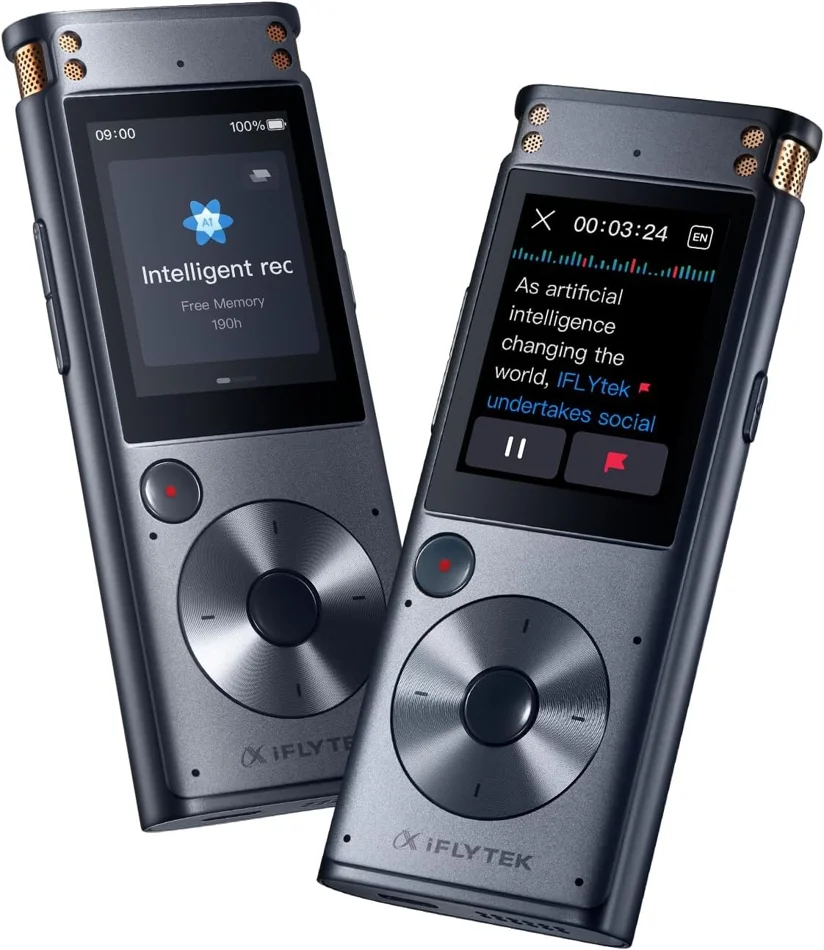
Controls, Screens, and Fast Meeting Workflow
Use this section as a practical lens while comparing voice recorders. The goal is not just to capture sound; it is to create a clear spoken record that can be reviewed, labeled, and handled responsibly after the meeting.
See the current product shortlist in 6 Best Voice Recorders for Meetings when you are ready to compare models.
Room Pickup. Meeting recorders need more than a sensitive microphone. They need to capture speakers around a table without turning paper movement, laptop taps, or air handling into the loudest sound in the file. For controls, screens, and fast meeting workflow, the useful test is whether the recorder makes spoken decisions easier to review without turning the meeting into a technical chore.
Room Pickup check. Place the recorder where people actually speak, then imagine the quietest participant at the far side of the table.
Clarity Over Volume. A loud recording is not always a clear recording. Useful models balance gain, noise handling, and spoken-word detail so notes are easier to review later. For controls, screens, and fast meeting workflow, the useful test is whether the recorder makes spoken decisions easier to review without turning the meeting into a technical chore.
Clarity Over Volume check. Listen for consonants, names, numbers, decisions, and action items, not just whether the waveform looks strong.
Battery Planning. Long meetings, interviews, lectures, and field notes can run past the expected finish time. Battery life should cover the real session with margin. For controls, screens, and fast meeting workflow, the useful test is whether the recorder makes spoken decisions easier to review without turning the meeting into a technical chore.
Battery Planning check. Choose a recorder that can handle the meeting, setup time, overruns, and quick review without immediate charging panic.
Storage Rhythm. Storage matters when teams record recurring meetings or long interviews. Clear folder structure and dependable file formats reduce the chance of losing the important session. For controls, screens, and fast meeting workflow, the useful test is whether the recorder makes spoken decisions easier to review without turning the meeting into a technical chore.
Storage Rhythm check. Think about how recordings will be named, moved, archived, and deleted before a busy week creates a pile of mystery files.
Controls. Simple controls matter because recording usually starts while people are settling in. A confusing interface can cause missed openings or accidental pauses. For controls, screens, and fast meeting workflow, the useful test is whether the recorder makes spoken decisions easier to review without turning the meeting into a technical chore.
Controls check. The record, pause, lock, save, and playback actions should be obvious without reading a manual in the meeting room.
Privacy Habit. Voice recorders should be used with consent and sensible boundaries. Practical recording plans include disclosure, secure storage, and deletion routines. For controls, screens, and fast meeting workflow, the useful test is whether the recorder makes spoken decisions easier to review without turning the meeting into a technical chore.
Privacy Habit check. A better recorder does not replace good meeting etiquette: tell people when recording starts and protect the files afterward.
Conference-table rehearsal. Imagine a normal meeting: chairs scrape, laptops open, one person joins by speakerphone, a quiet participant gives the budget number, and someone summarizes next steps while people are packing up. A useful recorder keeps that ordinary mess understandable enough for later notes.
Hybrid meeting reality. Many meetings now mix in-room voices with remote audio. A recorder may sit near a laptop speaker, on a table between people, or beside a conference phone. The buying question is whether the setup captures the discussion clearly without requiring a complicated studio arrangement.
File handoff. The best recorder is easier to live with after the meeting ends. USB transfer, common audio formats, predictable filenames, and enough storage all help the recording become a usable reference instead of another task. Teams should know who saves the file and where it goes.
Transcription preparation. If recordings will be transcribed, clarity becomes even more important. Consistent placement, low background noise, and clear speaker distance can improve automated transcripts and make manual review less painful. The recorder should support clean source audio rather than just long runtime.
Pocket and bag durability. Portable recorders often live in backpacks, briefcases, field kits, and desk drawers. Buttons, screens, ports, and battery doors should feel ready for repeated use. A recorder that is fragile or awkward may stay behind exactly when an interview or site note would be useful.
Lecture and training fit. Students, trainers, and workshop hosts need recorders that handle long spoken sessions and quick review. Bookmarking, playback speed, and simple folders can matter as much as microphone specs because the recording is only helpful if the key section can be found later.
Desk workflow. For internal meetings, keep the recorder in a consistent place with a charged battery and enough storage. Add a small checklist: announce recording, place recorder, confirm levels, lock controls if needed, stop and label the file, then store it where the team expects it.
Budget judgment. Higher-priced recorders can be worthwhile when they save time, reduce missed details, or support recurring professional use. For occasional notes, a simpler model may be enough. Value comes from matching clarity, controls, battery, and file handling to the number of recordings actually made.
Accessibility of review. Recordings often support people who cannot write notes quickly, who join a discussion late, or who need to verify exact wording. Clear audio and organized files make that support more useful. A recorder should make review calmer, not create another pile of unmanaged audio.
Final buying lens. Before choosing, walk through the whole path from consent to capture to transfer to transcription to deletion. If each step feels simple, the recorder is more likely to become part of the meeting routine. If any step feels fragile, compare another model before buying.
Speaker distance map. Draw a quick map of the room before trusting any recorder. The chair at the end of the table, the person beside the projector fan, and the remote voice coming through a speaker can all sound different. A practical recorder choice starts with those distances rather than a perfect product photo.
Meeting-start checklist. A calm checklist prevents avoidable mistakes: ask for consent, put the recorder near the conversation center, confirm the red light or timer, silence loose objects near the microphone, and note the meeting name. Those small habits often matter more than one extra feature in a spec list.
After-meeting review. The real test happens after everyone leaves. If the file is easy to find, the voices are understandable, and the action items can be checked without replaying the whole session three times, the recorder is doing its job. If review feels frustrating, compare microphone placement and workflow before blaming only the device.
Shared-team routine. When a recorder is shared by a team, create a simple routine for charging, storage, file transfer, and deletion. A labeled case, spare cable, and clear ownership prevent the common problem where the recorder exists but nobody knows whether it is ready for the next meeting.
Quiet-room assumption. Many product pages make recorders look best in quiet rooms, but real offices include HVAC noise, hallway chatter, keyboards, and chair movement. Compare models with that reality in mind. A dependable meeting recorder should help preserve speech even when the room is useful rather than silent.
Naming and retrieval. A recorder becomes more valuable when the team can find the right file weeks later. Use names that include the date, project, and meeting type, then store them in a predictable folder. Clear retrieval turns a recording into a reference instead of a forgotten audio dump.
Realistic feature restraint. Extra modes can help, but only if people understand them. For most meeting use, dependable record start, clear speech, sufficient battery, easy transfer, and stable storage beat a long list of confusing presets. Favor features that make the next real session easier.
Final fit note. Before buying, rehearse the first five minutes and the last five minutes of a real session. The recorder should be easy to start, easy to confirm, easy to stop, and easy to hand off for review without special technical help.
Meeting audio decision reminder
Return to the LeStallion voice recorder review after checking clarity, battery margin, storage, controls, transfer workflow, and consent habits.
Related cloud-chain reference: the previous support page covered business card holders for professionals, another work-tool guide kept near the end of the research path.